
Build Better Fiber Experiences
High-density fiber deployments require more than connectivity. Service providers need intelligent tools that simplify installations, provide greater network visibility, and help ensure every customer receives the experience they expect.
The NOVA2208 Optical Network Terminal ONT is part of Hitron’s Intelligent Connectivity platform. Combined with Hitron ProInstall® for faster, more accurate installations and HitronCloud® for network visibility, AI-driven analytics, and operational insights, Hitron helps service providers connect, measure, manage, secure, and optimize every connection—from installation through ongoing network operations.
Serve Multiple Customers from a Single Fiber ONT
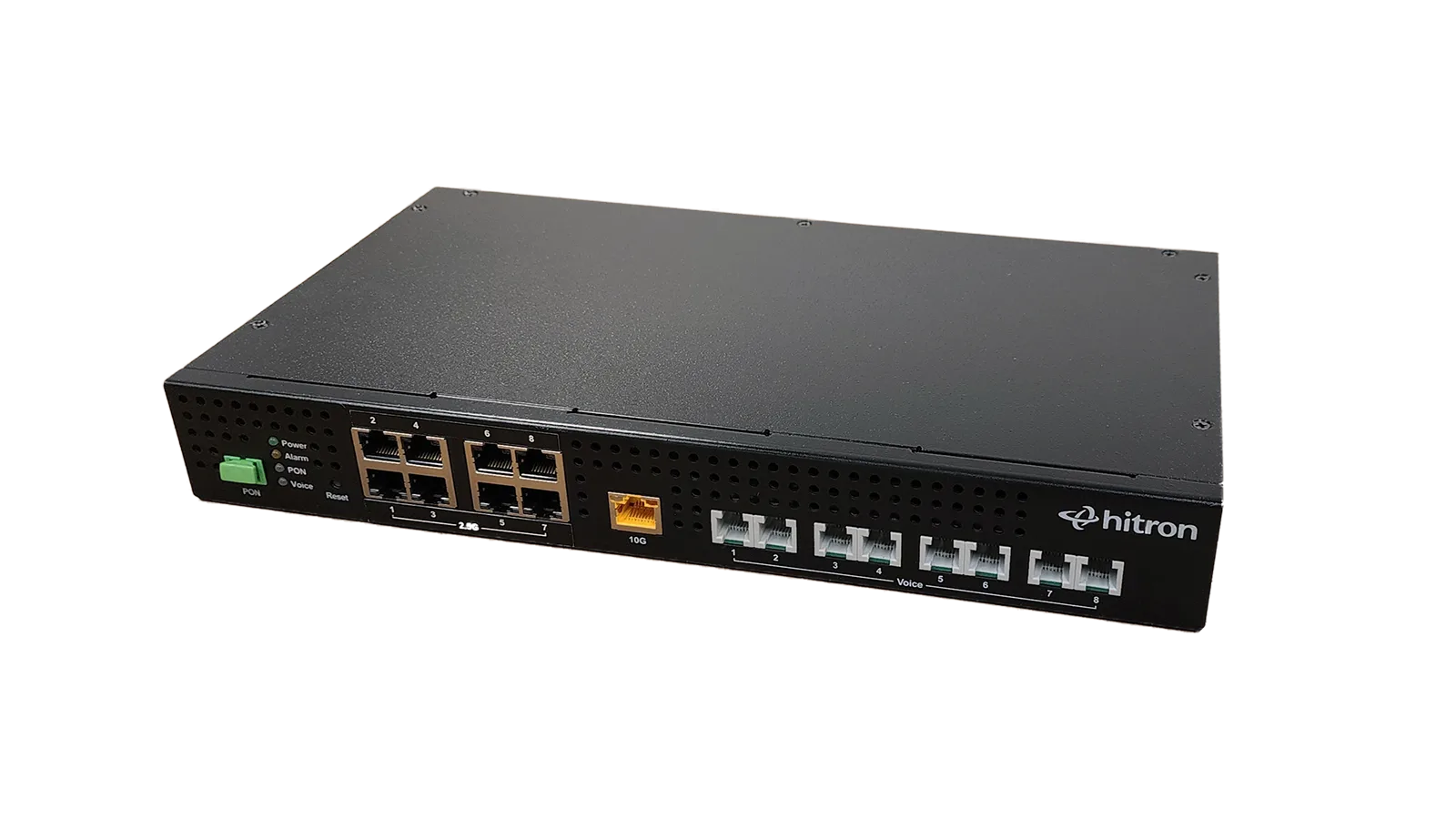
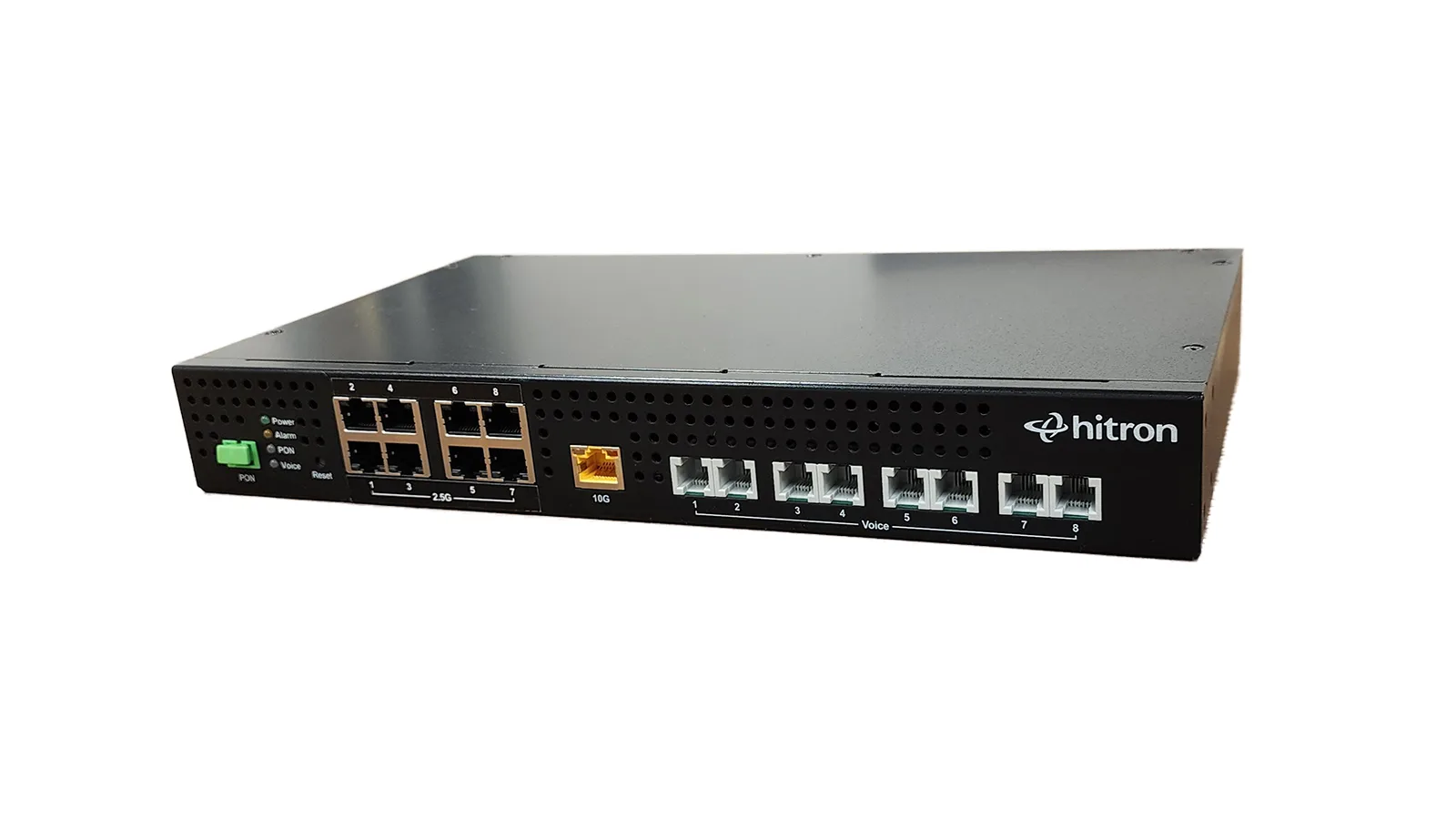
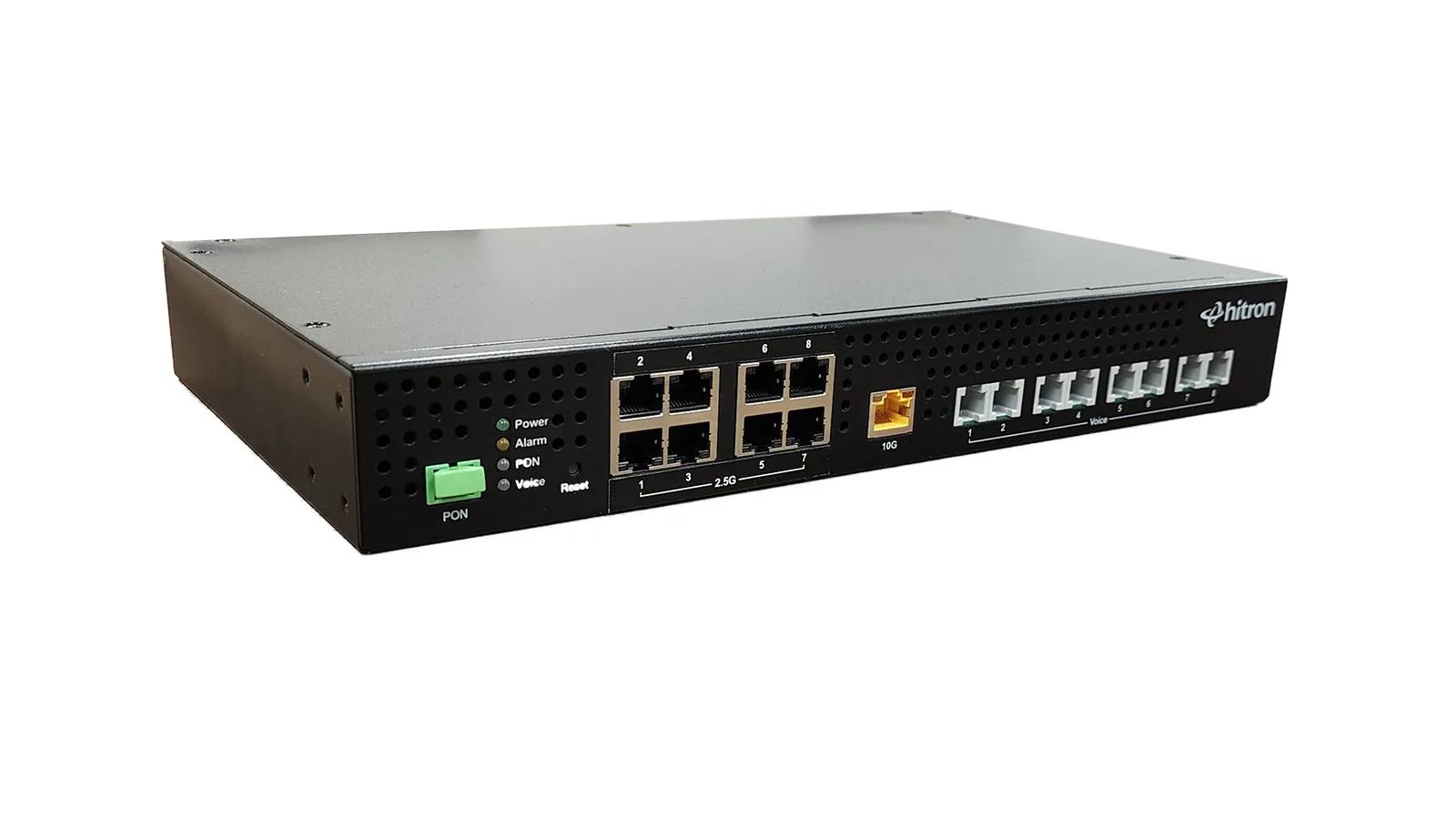
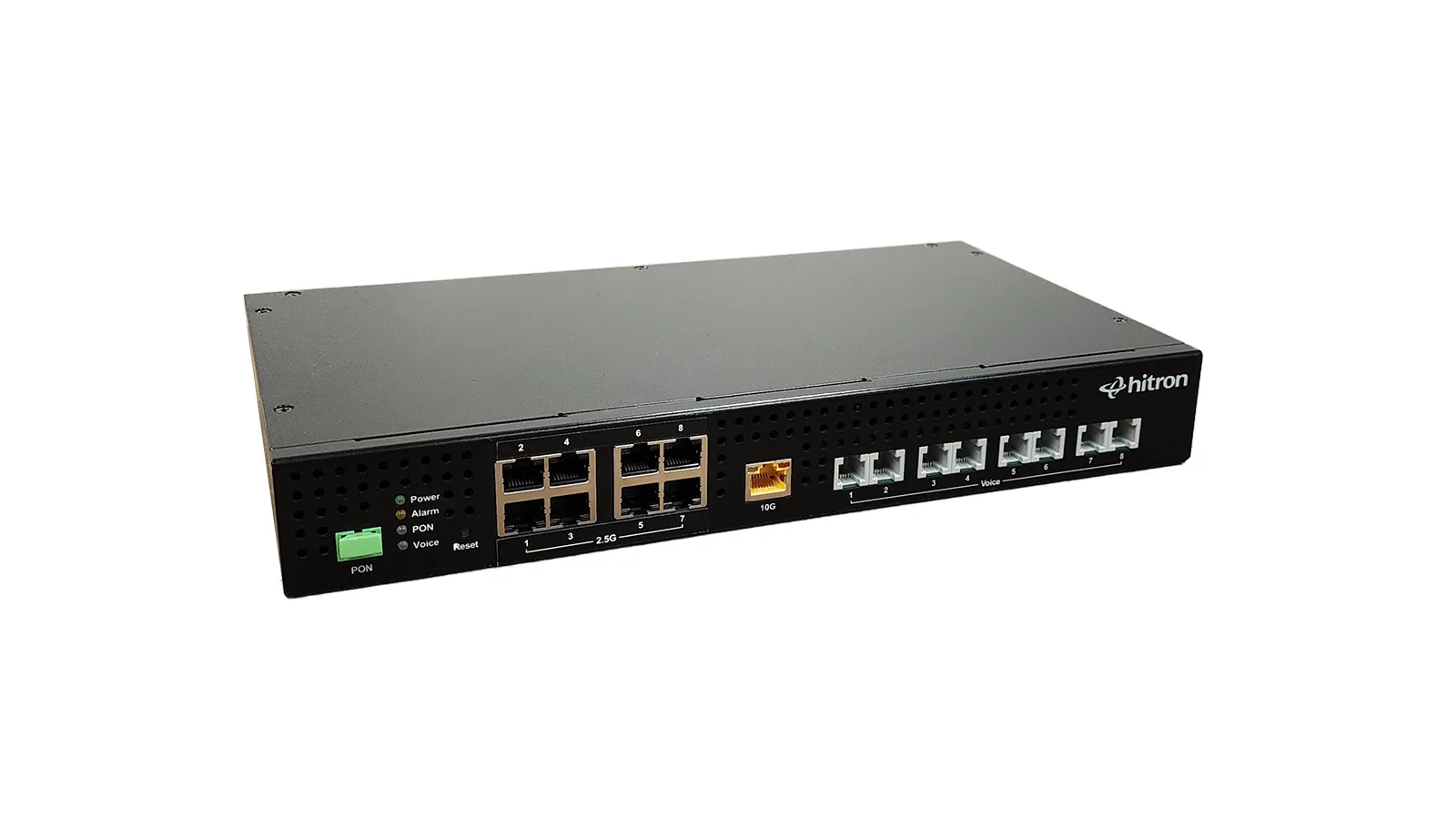
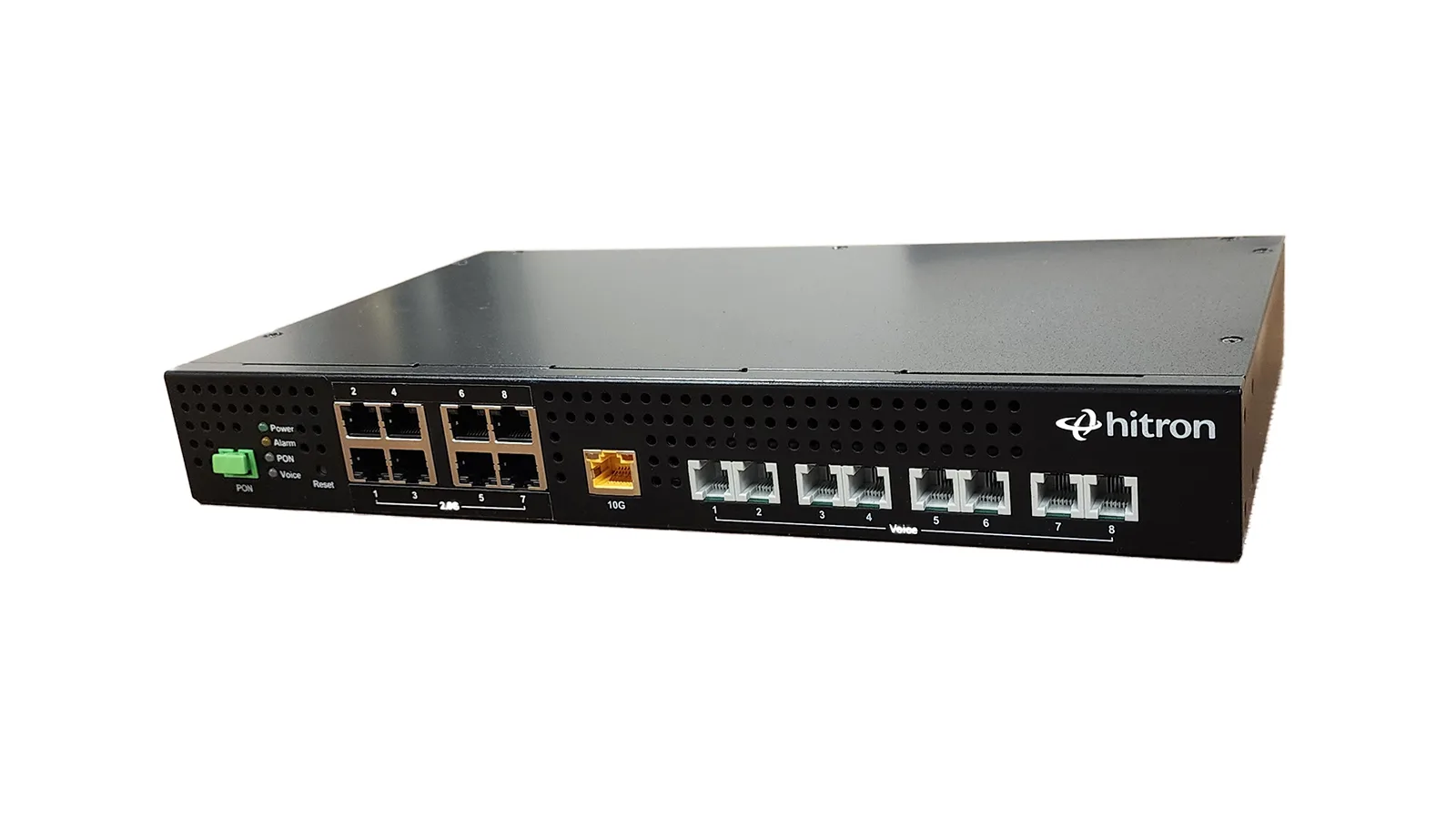
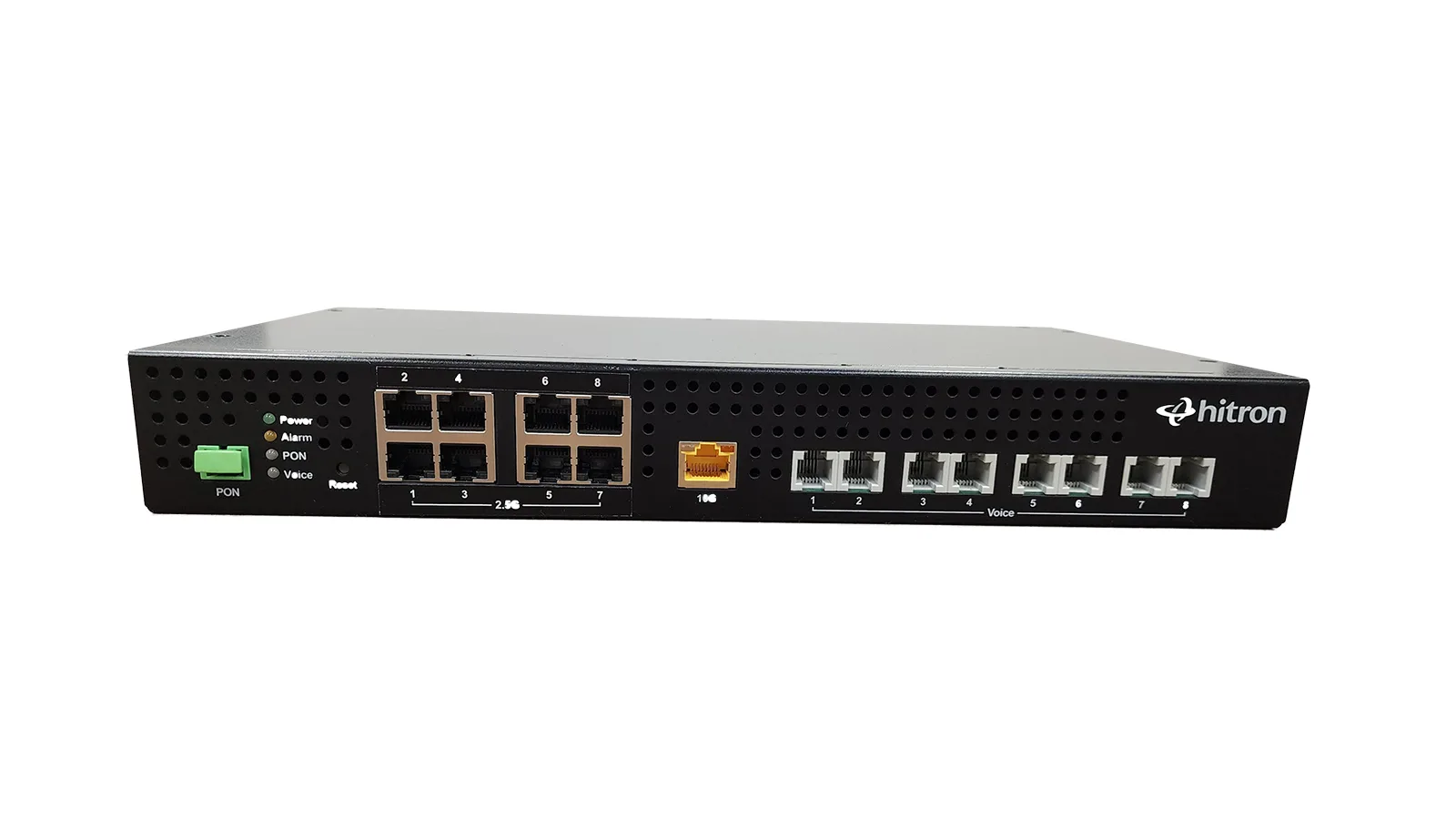
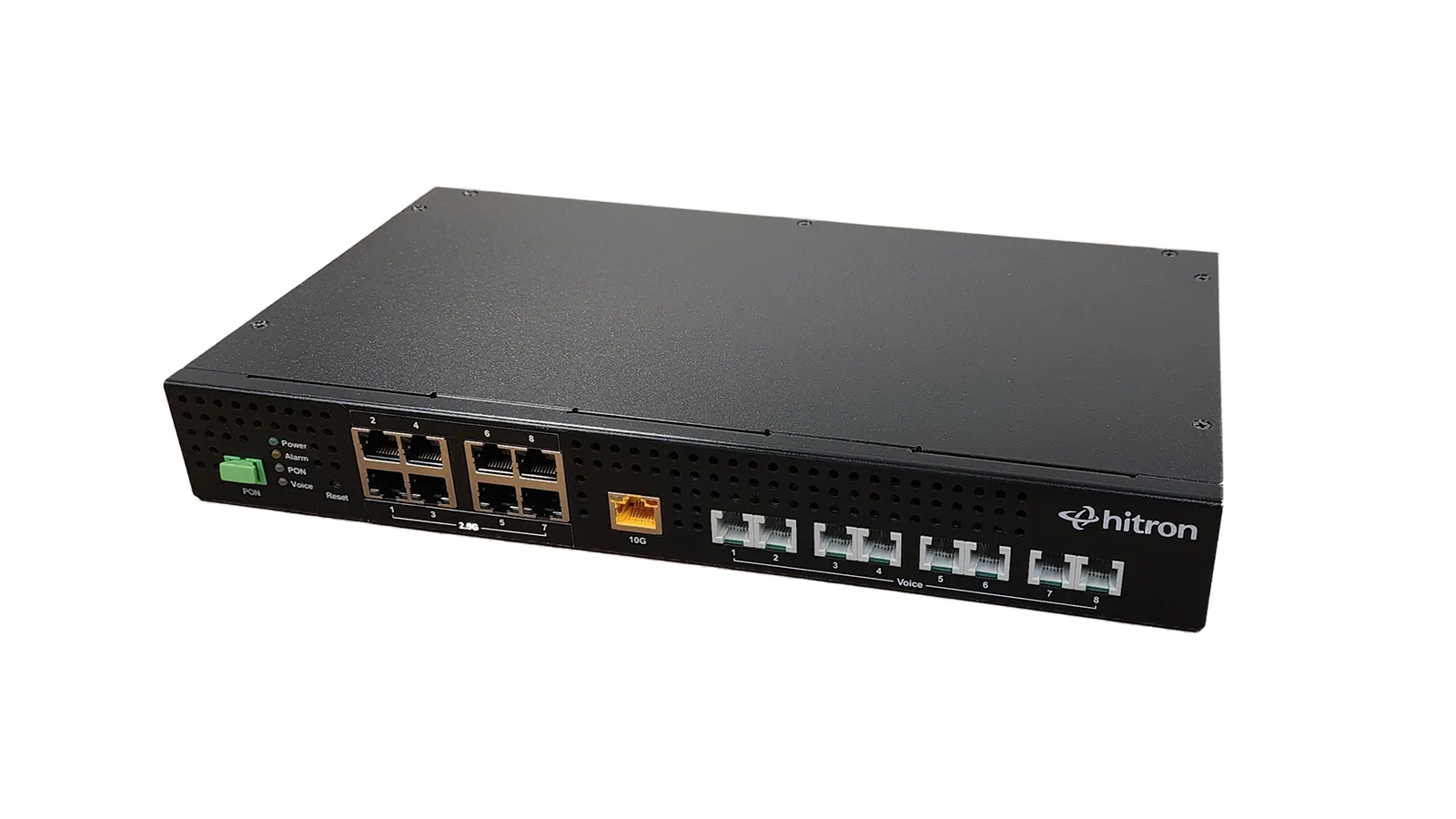
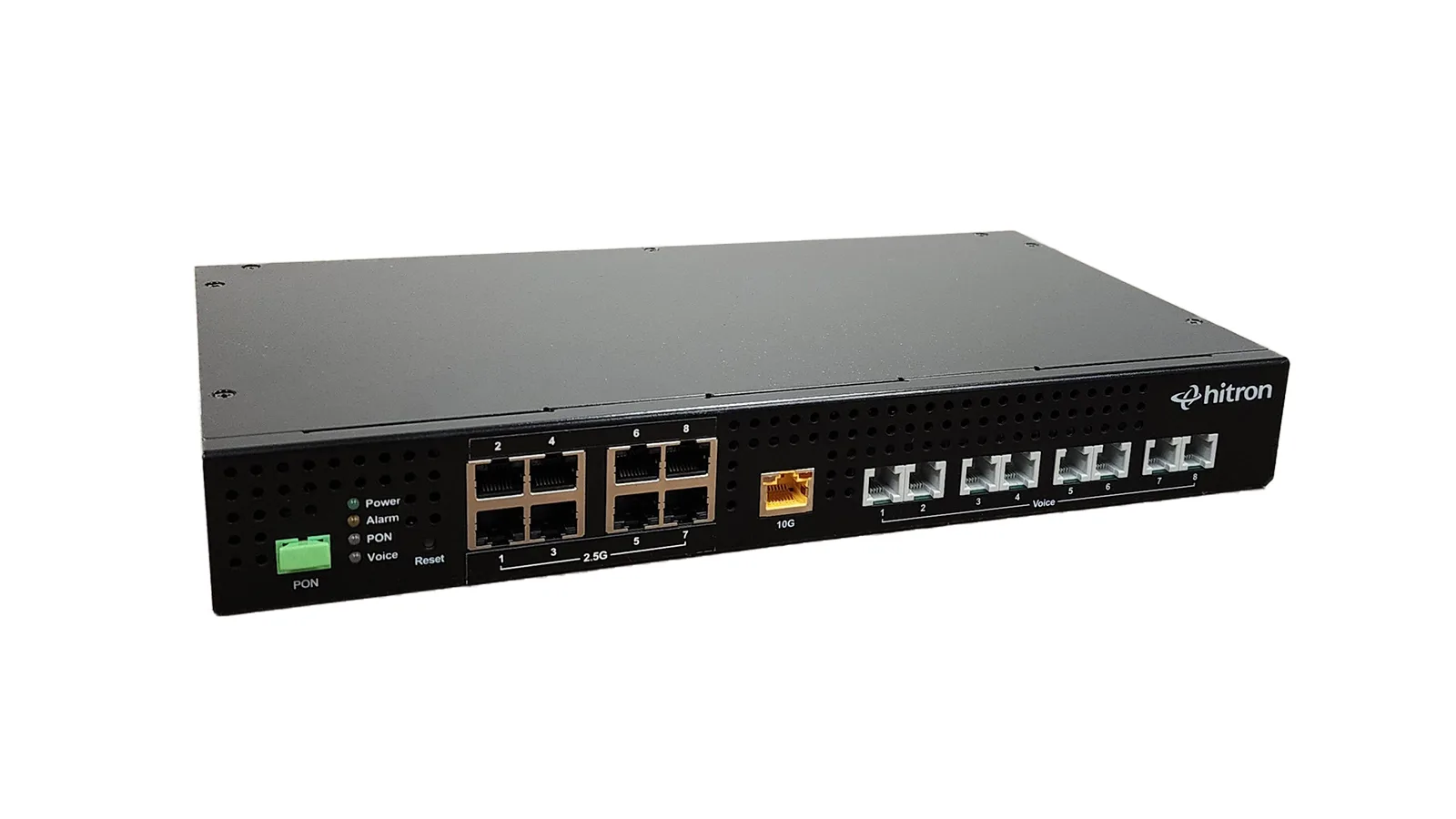
Eight independent 2.5GbE Ethernet ports allow operators to connect multiple apartments, customers, or services from one NOVA2208. This high-density architecture helps consolidate equipment and simplify fiber delivery in MDUs and other business environments.
Business Value
- Serve more customers with fewer ONTs
- Consolidate customer-premises equipment
- Simplify high-density fiber deployments
Deliver Broadband and Voice to Up to Eight Customers
Eight 2.5GbE service ports combined with eight integrated FXS voice ports give operators the flexibility to deliver high-speed broadband and voice services to multiple customers from a single platform.
Business Value
- Deliver broadband and voice from one platform
- Support multiple customers or service configurations
- Reduce equipment requirements
Deploy Across Multiple 10G Fiber Architectures
Support 10G-EPON, XG-PON, XGS-PON, and DPoE 2.0 from a single ONT, giving operators greater flexibility across different access networks while helping standardize equipment and simplify network evolution.
Business Value
- Support multiple fiber architectures
- Simplify equipment standardization
- Adapt as network requirements evolve
Bring Familiar DOCSIS Operations to Fiber
DPoE 2.0 compatibility enables cable operators to leverage familiar provisioning and operational environments as they expand fiber services. Combined with standards-based management and advanced diagnostics, the NOVA2208 helps operators simplify the transition to high-density fiber deployments.
Business Value
- Simplify fiber provisioning
- Leverage familiar operational workflows
- Reduce migration complexity
Hitron Ecosystem

Deployed by ISPs in High-Density Fiber Networks
The NOVA2208 is already being deployed by multiple service providers to support high-density fiber deployments. Its combination of multi-Gig Ethernet, integrated voice, multi-PON flexibility, and carrier-grade management gives operators a proven platform for efficiently extending fiber services to multiple customers from a single location.
Built on Hitron’s decades of broadband experience, the NOVA2208 provides the reliability, interoperability, and operational flexibility service providers need as they expand fiber into MDUs and other multi-customer environments.
NOVA2208 At a Glance
- High-Density Fiber Platform:
Serve multiple customers or service endpoints from a single 10G xPON ONT. - Eight Multi-Gig Service Ports:
Eight independent 2.5GbE Ethernet ports provide flexible connectivity for MDU and business deployments. - Eight Integrated Voice Ports:
Deliver voice alongside broadband with eight integrated FXS ports. - Multiple 10G PON Standards:
Support 10G-EPON, XG-PON, XGS-PON, and DPoE 2.0 for greater network flexibility. - Flexible Installation:
Rack- and wall-mounting options help operators deploy the NOVA2208 in a variety of commercial and multi-dwelling environments. - Advanced Management & Diagnostics:
Remote management, IEEE 802.3ah OAM, and MAC loopback capabilities help simplify monitoring and troubleshooting.
Documentation
Key Specifications
- PON Interface:
IEEE 802.3av 10G-EPON, ITU-T G.987.2 (XG-PON), ITU-T G.9807.1 (XGS-PON) - Ethernet Ports:
1× 10GbE WAN + 8× 2.5GbE LAN ports (multi-tenant support) - Voice Ports:
8× FXS RJ-11 ports for telephony - Provisioning:
DOCSIS DPoE 2.0 compliant - Diagnostics:
MAC loopback, IEEE 802.3ah OAM - Management:
TR-069, TR-369 (USP), advanced monitoring tools - Design:
Rack-mountable or wall-mountable, commercial-grade temperature range
*Please note that the NOVA2208 does not come with built-in provisioning support for the 8 Ethernet Ports. To configure each LAN port for individual apartments or customers within an MDU, Internet Service Providers (ISPs) will need to utilize a dedicated provisioning tool.
Why ISPs Choose the NOVA2208
- Deploy Anywhere: Support challenging indoor and outdoor fiber deployments with a hardened enclosure and flexible installation options.
- Simplify Fiber Migration: Leverage existing DOCSIS provisioning systems while transitioning subscribers to next-generation PON networks.
- Reduce Installation Complexity: Optional 10G PoE provides greater flexibility in ONT placement while reducing power constraints during installation.
- Maximize Network Flexibility: Support 10G-EPON, XG-PON and XGS-PON with one platform designed for multiple deployment scenarios.
- Improve Operational Efficiency:Configuration files and IEEE 802.3ah OAM simplify provisioning, monitoring and lifecycle management.
- Built for Residential & Business Services: Deliver premium multi-gig broadband services for today’s demanding residential and business subscribers.
A Complete Portfolio of Fiber CPE